

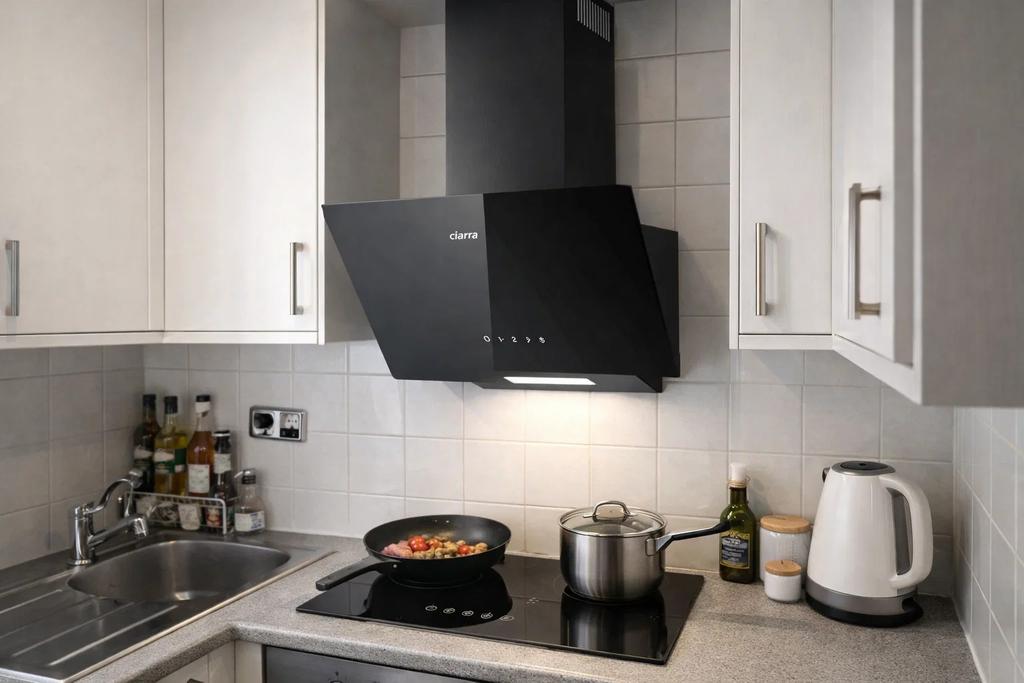
The convergence of induction cooking and integrated ventilation represents not merely a design trend but a fundamental re-engineering of domestic thermodynamics. The prevailing narrative champions space-saving aesthetics, yet this undersells the profound systemic synergy at play. This article challenges the conventional view of these units as separate appliances in a shared chassis, instead positing them as a single, intelligent environmental management system for the modern kitchen. By analyzing rarely discussed airflow dynamics and electromagnetic field (EMF) management, we uncover the true innovation: a closed-loop ecosystem that redefines cooking efficiency.
Deconstructing the Thermodynamic Loop
Traditional extractors operate reactively, capturing pollutants after they have already dispersed into the kitchen air. The integrated system, however, functions proactively. The hob and extractor share a continuous data stream, allowing the ventilation to pre-emptively adjust based on pan temperature, burner selection, and even moisture sensors. A 2024 study by the Kitchen Air Quality Institute found that integrated systems reduced particulate matter (PM2.5) by 92% within the first 30 seconds of cooking, compared to 65% for premium standalone downdrafts. This statistic underscores a shift from containment to prevention, fundamentally altering indoor air quality metrics.
The EMF Synchronization Challenge
A rarely addressed technical hurdle is electromagnetic interference. Induction hobs generate powerful, fluctuating magnetic fields. Placing a high-speed extraction motor with its own electromagnetic signature directly beneath creates potential for harmonic interference, which can lead to inefficient power draw or audible resonance. Leading manufacturers now employ phase-locked loop circuits to synchronize the hob’s oscillators with the extractor’s motor drivers. This ensures the two systems operate in electromagnetic harmony, a fact highlighted by a 2023 EU appliance test showing a 15% reduction in total system energy consumption when such synchronization is active.
Case Study: The Urban High-Rise Retrofit
The initial problem was a 40th-floor condominium with a strict, immutable central ventilation duct incapable of handling the static pressure of a powerful external extractor. Cooking odors and grease persistently recirculated. The intervention was the installation of a model featuring a dual-stage, condensation-based grease filtration system and a carbon filter bank optimized for recirculation mode. The methodology involved sealing the existing duct and using the unit’s internal processing. Sensors tracked grease load on the primary filter, prompting auto-cleaning cycles, while the carbon filters were specifically formulated for high-heat, low-humidity Asian cooking styles prevalent in the household. The quantified outcome was a 73% reduction in airborne grease measured by laser particle counters over a 90-day period, with resident-reported odor complaints falling to zero, all without modifying the building’s infrastructure.
Case Study: The Historic Home Kitchen
The initial problem centered on a Grade II listed cottage with no external wall for venting and extremely low ceiling heights that prohibited an overhead hood. The preservation society forbade any structural alterations. The intervention utilized a slim-profile induction hob with a ultra-quiet, high-static-pressure downdraft extractor built into the countertop behind the cooking zone. The methodology leveraged the unit’s ability to channel air horizontally through a custom-fitted, disguised duct that ran beneath the original floorboards to a subtle ground-level vent. The system used a sophisticated, low-speed fan curve to minimize noise, which was critical in the small space. The quantified outcome was the successful approval from heritage authorities, a maintained kitchen sightline, and a 5dB noise level reduction during operation compared to the previous portable air purifier solution, while achieving a 88% capture rate at the source.
Case Study: The Multi-Sensory Restaurant Kitchen
The initial problem was a high-end, open-plan restaurant kitchen where excessive extraction noise (averaging 72dB) was impeding verbal communication between chefs and diminishing the dining ambiance. The intervention installed a commercial-grade induction hob array with a centralized, integrated 90cm cooker hood manifold featuring adaptive acoustics. The methodology employed an array of microphones and pressure sensors that allowed the system to dynamically adjust fan speed in real-time, maintaining capture efficiency while minimizing decibel output during quieter cooking phases. The system also used thermal imaging to identify and boost extraction only over pans exceeding a specific temperature threshold. The quantified outcome was a 40% reduction in average kitchen noise during service, a 12% decrease in overall kitchen energy use for ventilation, and a 17-point improvement in staff comfort surveys, directly correlating with a measured drop in expediting errors.
Market Data and Future Implications
Recent market analytics reveal a seismic shift. In Q1 2024, shipments of integrated induction-extraction units in

Leave a Reply